Hybrid Thinking: Should a Glow-worm Boiler Share the Load With a Heat Pump in 2026?
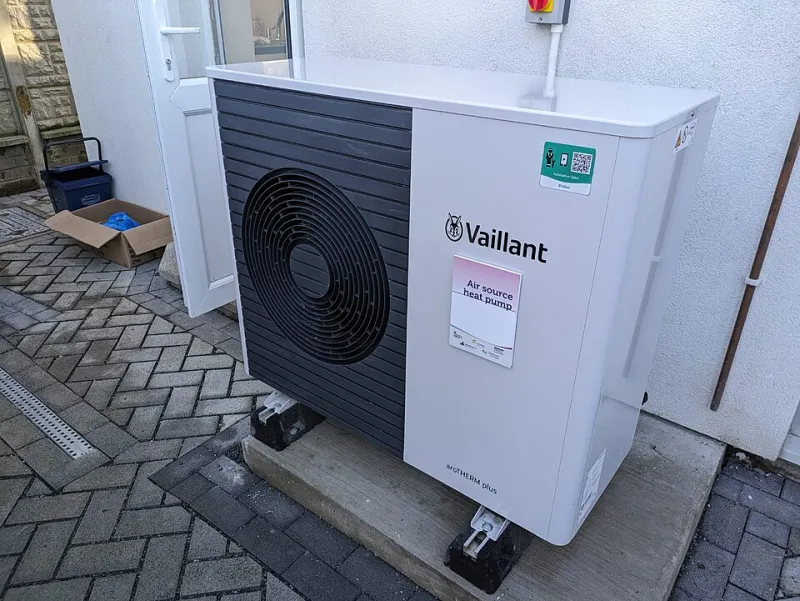
Photo: Southend-on-Sea Borough Council, UK, CC0, via Wikimedia Commons
Hybrid heating has a tempting pitch: keep the comfort and hot water of a gas boiler, add an air source heat pump to do the heavy lifting in milder weather, and cut your carbon without a full-scale retrofit. In 2026, with heat pump grants still in play and electricity prices still stubbornly high, plenty of Glow-worm owners are asking whether a hybrid is the pragmatic choice.
Sometimes it is. Often it is not. The difference comes down to the house, the radiators, the controls and what you actually want from the next fifteen years.
What a Glow-worm hybrid actually involves
A hybrid pairs a Glow-worm boiler with a small air source heat pump. The heat pump handles space heating for much of the year, while the boiler takes over when it gets properly cold or when the heat pump cannot keep up. Some systems also let the boiler handle hot water.
The critical word is control. A hybrid is only as clever as the box deciding which heat source runs and when. Set the switchover point badly and you end up with an expensive heat pump that barely runs and a boiler doing all the work. Set it well and the heat pump can cover a healthy share of the year's heating demand.
The upfront maths: grants, costs and payback
A straightforward boiler replacement might sit somewhere in the mid four figures. A hybrid installation is a different league — typically several thousand pounds more once you account for the heat pump, outdoor unit, controls and any radiator upgrades.
The Boiler Upgrade Scheme grant of £7,500 has done a lot for standalone heat pumps, but it is designed around homes where the heat pump becomes the primary heating source. Hybrid systems with a fossil fuel boiler still in place generally do not qualify. So the grant that makes a standalone heat pump more palatable often does not apply here.
Running costs are similarly nuanced. Gas remains cheaper per kilowatt hour than electricity, but a heat pump delivers more heat per unit of electricity than a boiler does per unit of gas. In a well-set-up hybrid, the heat pump can be cheaper to run in mild weather. In a badly set-up one, the savings evaporate. Payback on the extra upfront cost is rarely quick, and anyone promising a two-year return is probably selling rather than explaining.
Is your home ready for a heat pump to do the heavy lifting?
This is where the conversation should start. Heat pumps work best with lower flow temperatures, which means a well-insulated home and radiators sized to deliver enough heat at 45 to 50°C rather than 70°C.
Ask yourself:
- Is the loft insulated to a decent depth, and are the walls insulated if they can be?
- Are the radiators generous enough, or will several need upsizing?
- Is there space outside for an air source unit, away from windows and boundaries?
- Is the electrical supply up to the job, and will the unit need planning permission?
- Is there room for a hot water cylinder if one is needed?
A hybrid can work around some of these limitations — that is part of its appeal. If your radiators are marginal and a full radiator overhaul is too expensive right now, the boiler can cover the coldest days. But that is damage limitation, not a heat pump performing at its best.
The case for a hybrid
A hybrid makes most sense in homes where a standalone heat pump would demand a lot of extra work. Solid walls, limited radiator space, a boiler with plenty of life left in it, or a phased approach to retrofitting all push the argument toward hybrid.
It also keeps a gas boiler as a familiar safety net. For homeowners who want to reduce gas use without betting everything on a single technology, that reassurance has value. And if the boiler is already a modern Glow-worm, pairing it with a heat pump can be less disruptive than starting from scratch.
The case against
Two heating appliances mean two things to service, two things to replace and more to go wrong. A hybrid still burns gas, so the carbon savings are partial rather than transformative. It is not usually the cheapest route to lower bills, and it is not grant-friendly in the way a standalone heat pump is.
There is also a strategic question. If your boiler is on its last legs and your radiators need upgrading anyway, spending the hybrid premium might be worse value than putting that money into a properly designed standalone heat pump. A halfway house is only worth it if it genuinely gets you somewhere.
Questions to put to an installer
Before committing, ask:
- What heat loss calculation have you done, and what flow temperature are you designing for?
- What share of my annual heating will the heat pump realistically provide?
- How will the system decide when to switch between heat pump and boiler?
- Which Glow-worm boiler and heat pump models are you proposing, and why?
- What radiator changes are included, and what happens if they are not enough?
- What are the noise, siting and planning implications of the outdoor unit?
- What will servicing cost per year for both appliances, and what does the warranty cover?
- What would you install in your own home, and why?
That last question is often the most revealing.
Where I land
A Glow-worm hybrid can be a sensible bridge for a particular kind of UK home: one where a standalone heat pump would mean a costly, disruptive retrofit and where the boiler still has years of useful life. It is not a magic bullet for energy bills, and it is not the cheapest way to cut carbon.
If you are replacing a boiler anyway and your home is reasonably well insulated, put the money into a properly sized heat pump and the radiators to match. If you are retrofitting in stages and want to keep a gas safety net for now, a hybrid deserves a serious look — provided the controls are designed properly and the installer is honest about the running costs.
Either way, get the heat loss calculation before the quote. The technology matters less than whether it suits the house.